
Common Signs Your Roof Needs Storm Restoration
Call directly(737) 230-7099Tell us what you need.
Takes about a minute. We'll follow up within one business day. No pressure, no upsells.
Why Choose Over and Above Contracting for Common Signs Your Roof Needs Storm Restoration
Living in Central Texas, you know that severe storms can arrive with little warning — often bringing high winds and hail that leave real damage behind. Some of it you can spot from the driveway. Most of it you can't. Recognizing the signs early is what separates a manageable repair from a costly replacement.
This guide walks through what to look for after a wind or hail event: shingles, flashing, gutters, and what's happening inside your attic. If your home in Round Rock has taken a hit recently, read this before you call your insurance company.
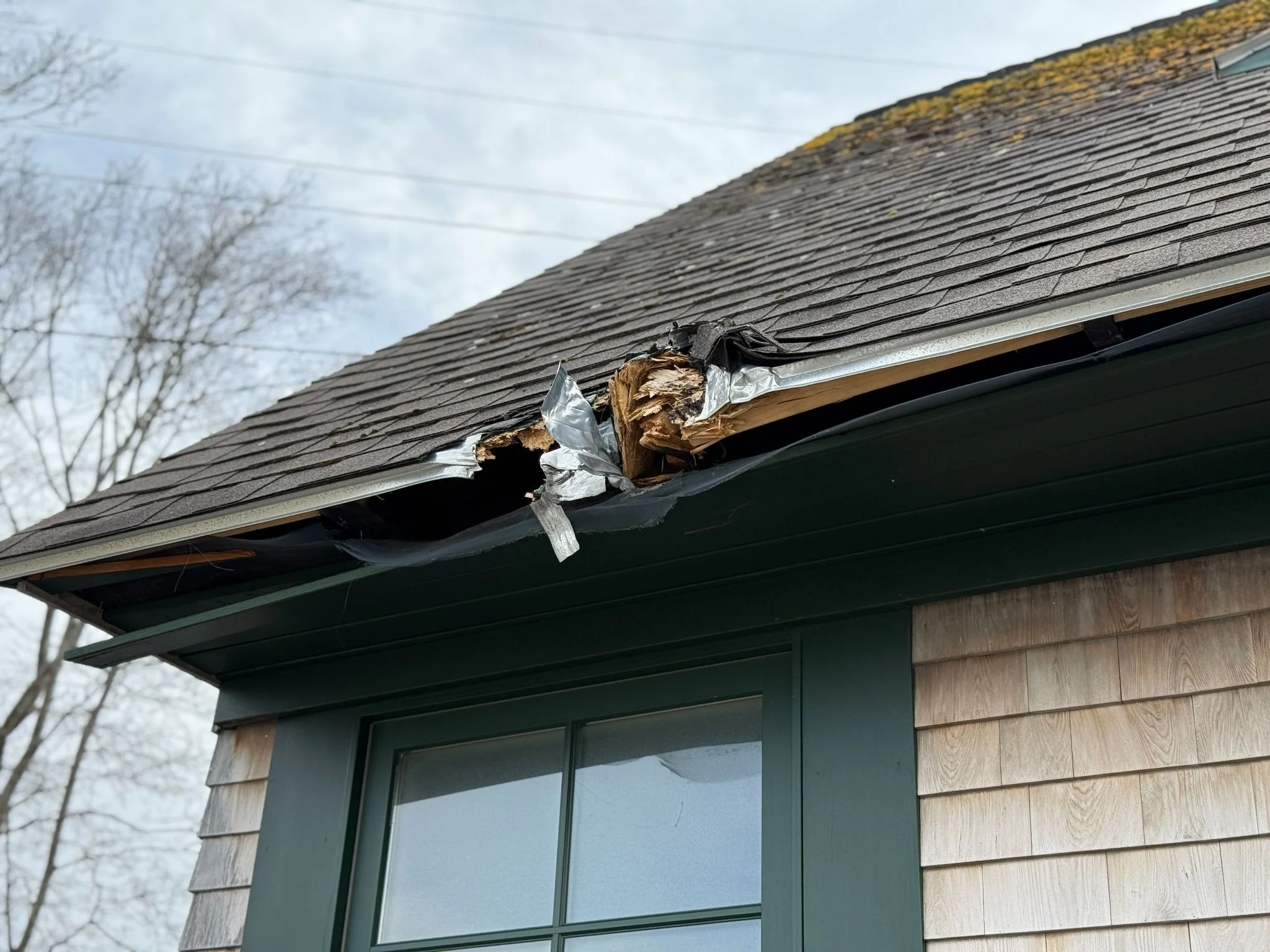
Roof damage and deterioration visible on asphalt shingles near a gutter and fascia, showing the need for roof repair or replacement work.
Shingle Damage After Hail and Wind
After a storm, shingle damage is usually the first thing homeowners notice — but not always the easiest to read from the ground. Hail doesn't always punch through a shingle cleanly. More often it fractures the granule layer, which is the shingle's first line of defense against UV exposure and water. That kind of damage is easy to miss and quick to worsen.
When you're doing a post-storm walkthrough, look for shingles that are cracked, curled, or visibly bruised. Check the gutters and the ground around your home for granule accumulation — a heavy deposit after a storm is a reliable indicator that your shingles took a hit. Any shingles that have lifted, shifted, or gone missing entirely need attention before the next rain. For a deeper breakdown of hail-specific damage patterns, our roof hail damage guide covers what inspectors look for and why some damage doesn't show up for weeks.
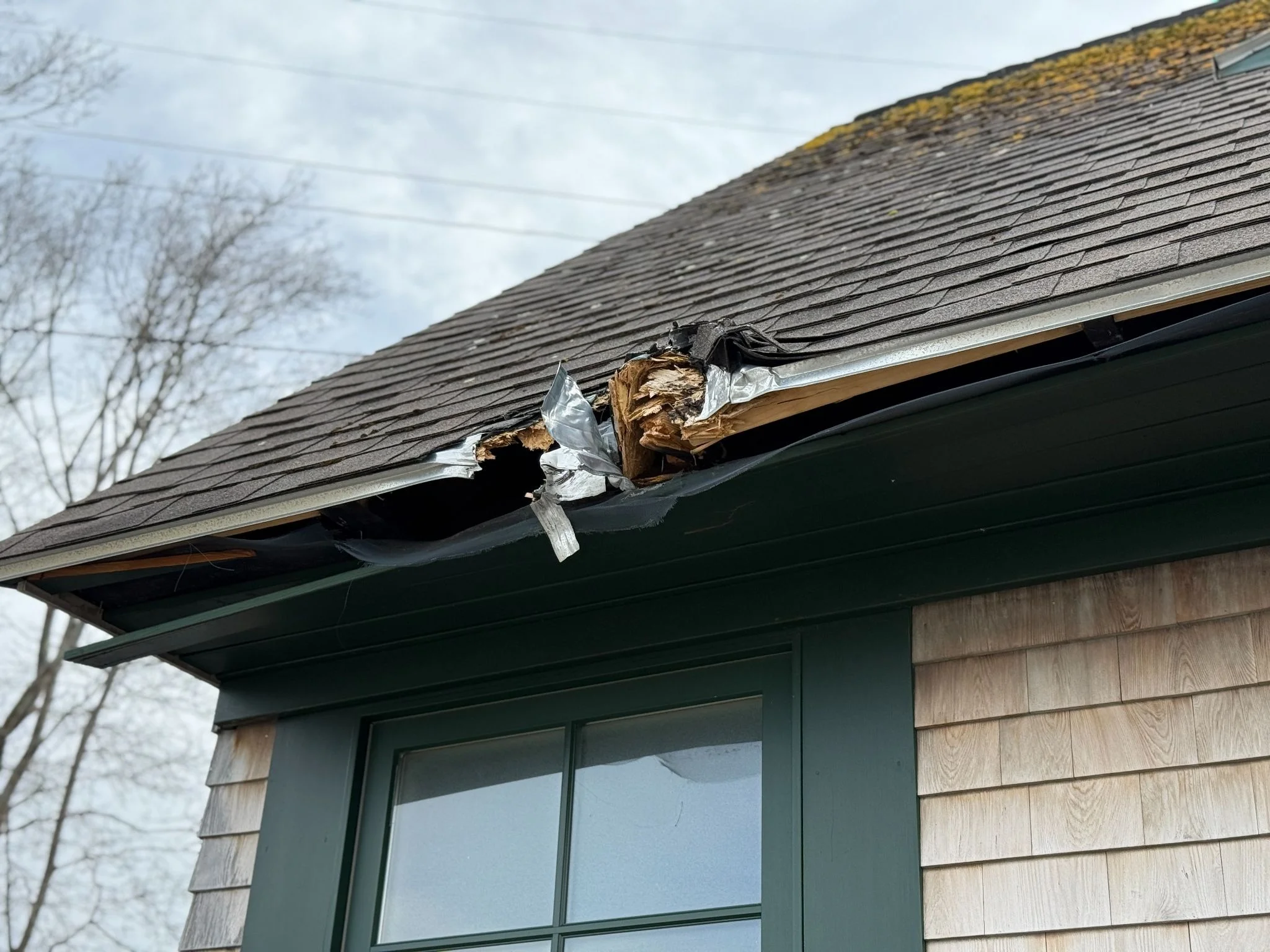
Roof repair work showing damaged shingles and exposed wood framing on a residential roof with green trim.
Flashing and Vents: Where Hidden Damage Hides
Flashing seals the joints between roof surfaces — around chimneys, skylights, pipe boots, and dormers. It's thin metal, and high winds bend it. Hail dents it. When it pulls away from the surface it's protecting, water finds the gap fast.
After a storm, check for loose or bent flashing around any roof penetration. Look for rust, visible gaps, or sections that have separated from the surface. Damaged or missing vent covers are equally important — a compromised attic vent is an open door for water, pests, and accelerated interior moisture damage. These aren't the details that show up in a drive-by inspection, which is why a proper roof repair evaluation matters after any significant weather event.

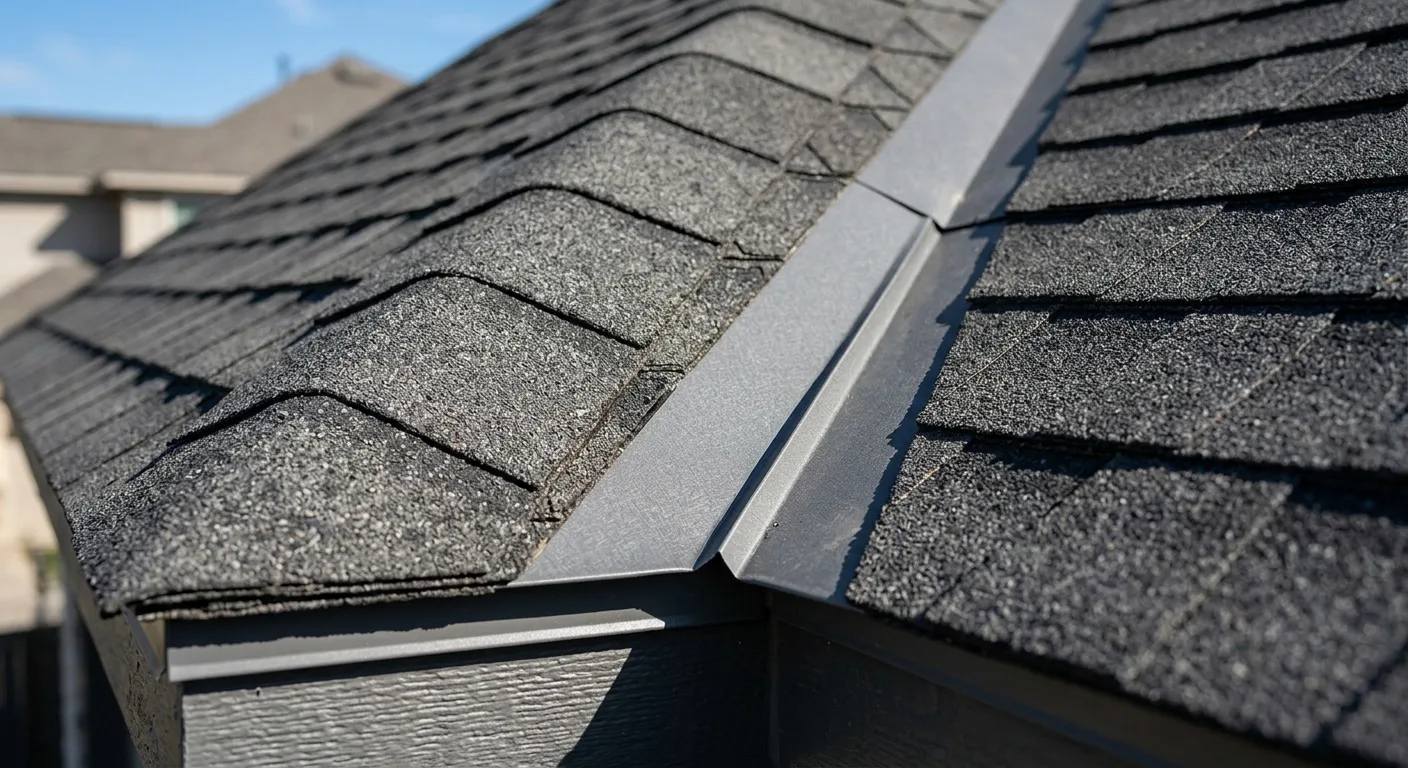
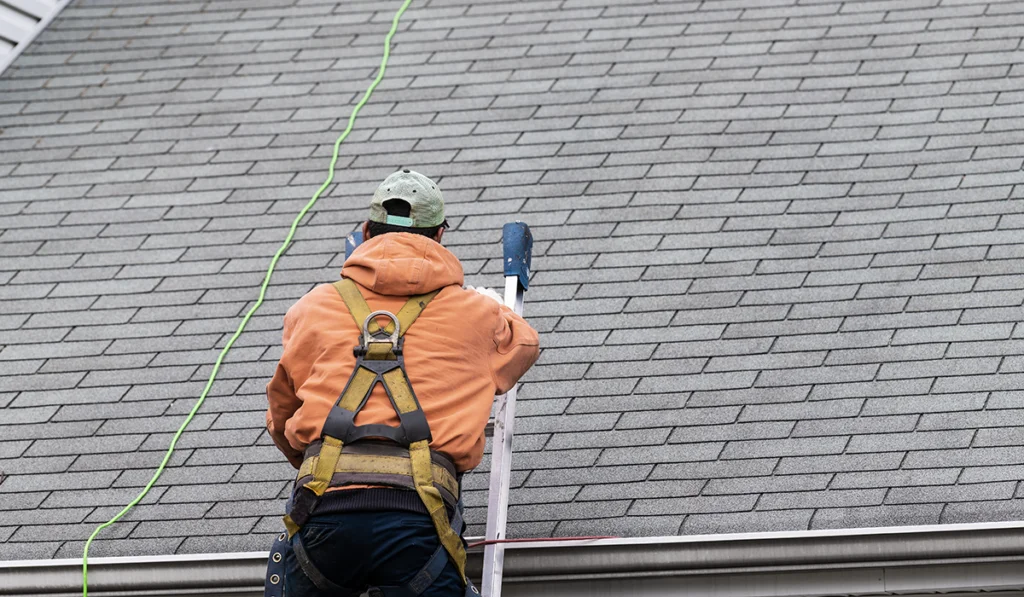
AI-generated roofer image for common-signs-your-roof-needs-storm-restoration-after-high-winds-and-hail
Gutter and Downspout Damage After Severe Storms
Gutters take a beating in hail storms. The dents are obvious. What's less obvious is when a section has pulled away from the fascia just enough to let water back up under the roofline — or when a downspout has shifted and is now directing water toward the foundation instead of away from it.
After a storm, look for sagging or misaligned gutter sections, visible hail dents or punctures, and pooling water near the foundation. Check that downspouts are still properly directed away from the structure. Debris jams are common after wind events and can cause water to back up under your roofing system, leading to rot in the decking and fascia boards over time.
AI-generated roofer image for common-signs-your-roof-needs-storm-restoration-after-high-winds-and-hail
Roof Leaks and Attic Warning Signs
Roof damage doesn't always announce itself on the exterior. Some of the clearest evidence is inside — specifically in the attic. After a storm, take a flashlight up there and look for damp or compressed insulation, water stains on the sheathing, or daylight showing through where it shouldn't. On the living side of the ceiling, watch for water stains, peeling paint, or bubbling drywall.
Musty odors that appear after a storm are worth taking seriously. Trapped moisture in an attic moves fast in Texas humidity — mold can establish within 24 to 48 hours in the right conditions. Interior signs like these mean water has already made it past your roof's outer layers and the clock is running. This is covered in more depth in our homeowner's guide to roof repair.

AI-generated roofer image for common-signs-your-roof-needs-storm-restoration-after-high-winds-and-hail
Why Waiting Costs More in Central Texas
In the Round Rock area, storm damage that goes unaddressed doesn't stay static. Texas heat and humidity accelerate everything — wood rot, mold growth, insulation degradation. A small flashing gap that seems minor in May can become a significant interior leak by July.
Choosing a contractor who knows Central Texas storm patterns matters. Over and Above Contracting is based in Round Rock and works with homeowners throughout Williamson County. We're not a traveling crew that shows up after a hail event and moves on. If you've taken storm damage, we'll evaluate every layer — shingles, flashing, gutters, and attic ventilation — and give you a straight assessment before you file a claim. See how our approach compares in our post on storm restoration vs. roof repair.
Schedule a Free Roof Inspection in Round Rock
If your home has recently been through high winds or hail, don't wait for small damage to turn into a bigger problem. Over and Above Contracting, LLC specializes in storm damage restoration, roof repairs, and gutter work for homeowners across Central Texas. Call Mike at (737) 230-7099 or fill out the online form to schedule your free roof inspection.
Frequently Asked Questions
What does wind damage look like compared to hail damage? +
Why should I check my gutters after a storm? +
What attic signs mean the roof is already leaking? +
How long after a storm can I still file a claim? +
Related
You Might Also Need
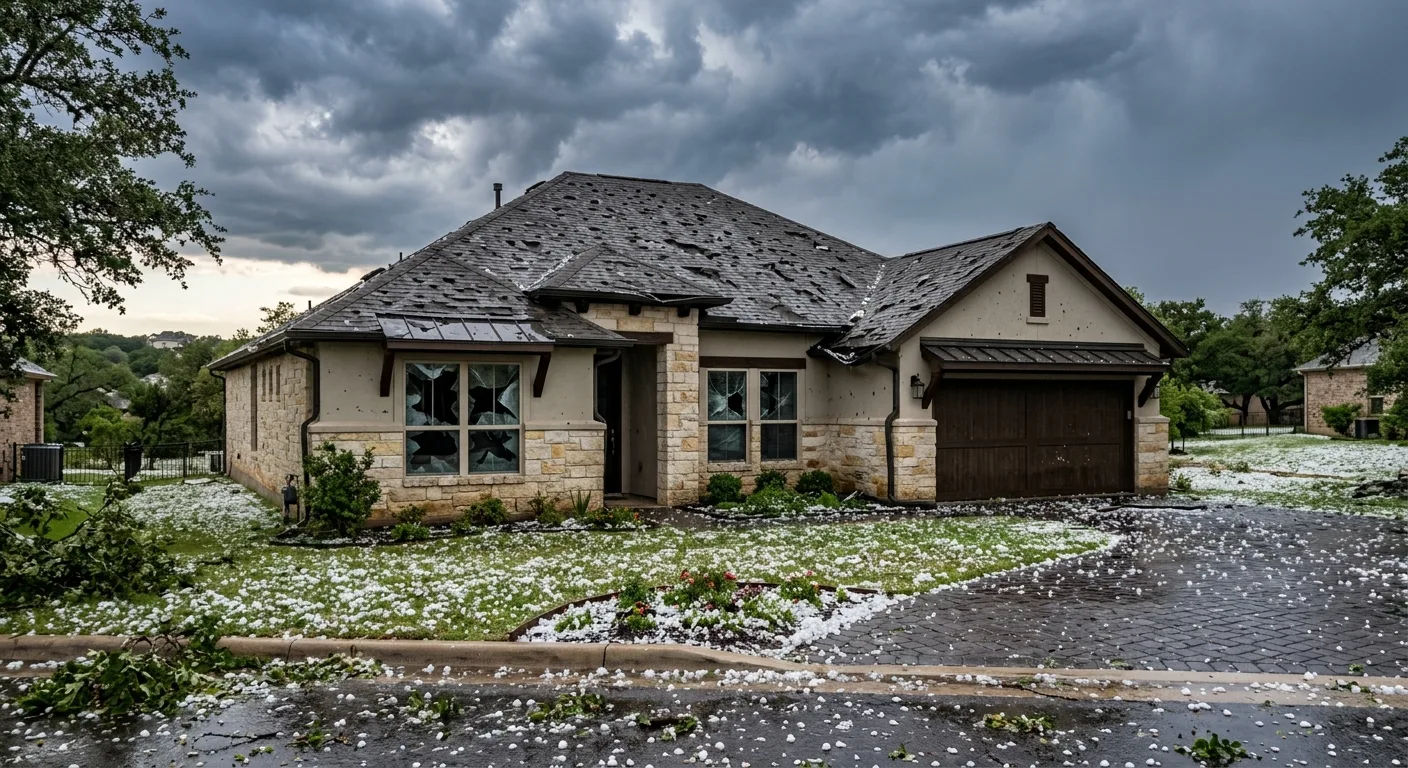
Hail And Storm Damage Restoration
Hail-damaged roof? Get it inspected before you call your insurer. Over and Above Contracting restores storm-damaged roofs right. Call Mike…
Reliable Repairs Emergency Roofing Services
Roof leaking after a storm? Here's what to do first. Over and Above Contracting responds fast, patches the damage, and protects your home.…

Residential Roofing Installation
New roof installation done right from decking to ridge cap. Get a free estimate from Mike Ennis at Over and Above Contracting. Call (737)…
From the Blog
Hidden Roof Damage Caused By Texas Hailstorms
Texas hail hides damage that shows up months later. Learn what to look for after a storm — and why a professional inspection protects your…
How Central Texas Summer Heat Ages Your Roof Faster
Central Texas summers push roof surfaces past 150°F. Learn how heat and UV damage asphalt shingles, what warning signs to watch for, and…
How Hail Damage Can Affect Your Home Insurance Claim
Learn how hail damage is assessed, what insurance adjusters look for, and how a Round Rock roofing contractor can help you file a stronger…